01
Rust and previous repair
Locate perforation, swelling seams, moisture traps, brazed or overlapped patches, excessive filler and corrosion that extends beyond the visible opening.
Paint can only reflect the surface and structure beneath it. Classic car metal and body work begins by exposing the real condition, protecting sound metal, removing corrosion and restoring panel relationships before cosmetic finishing starts.
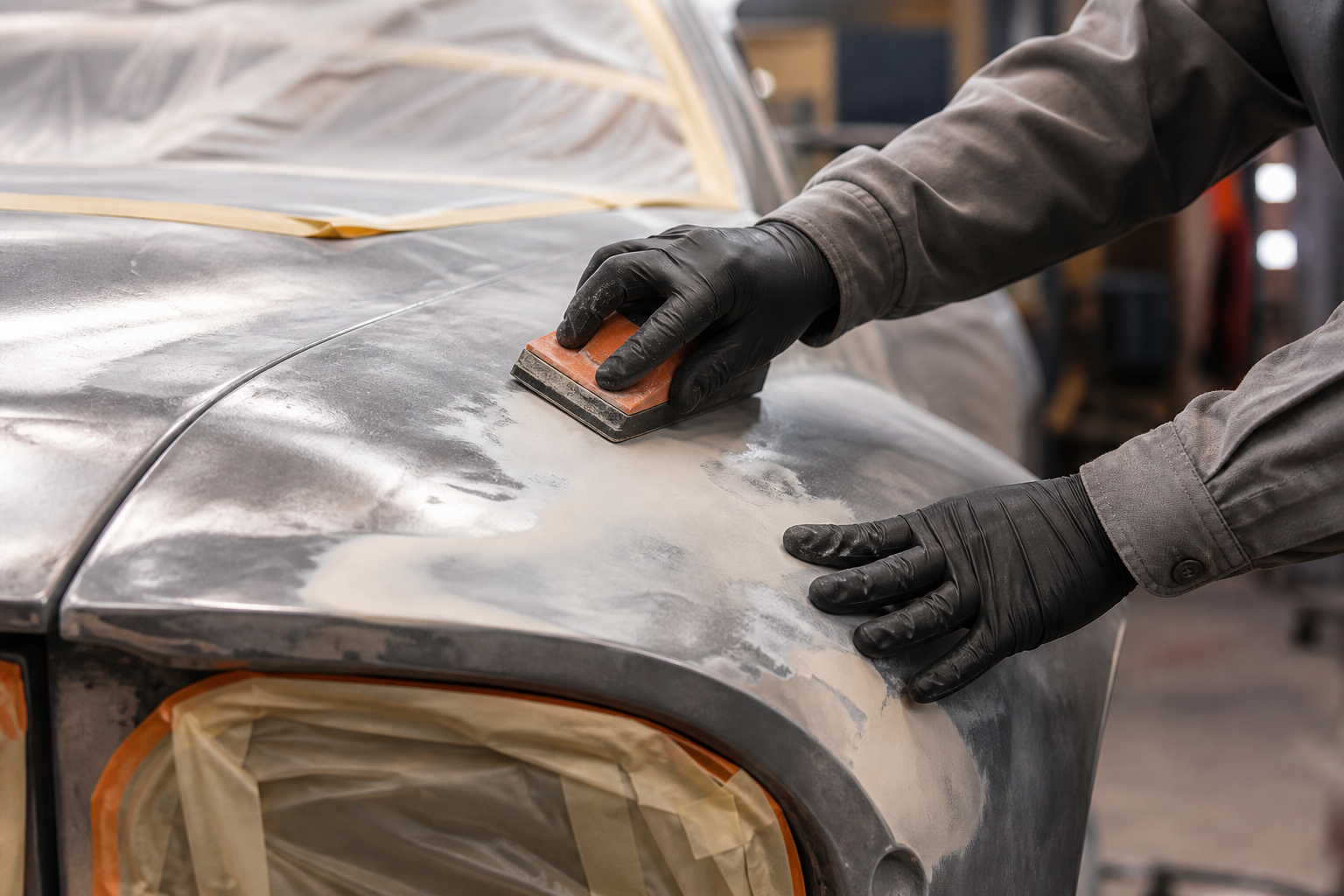
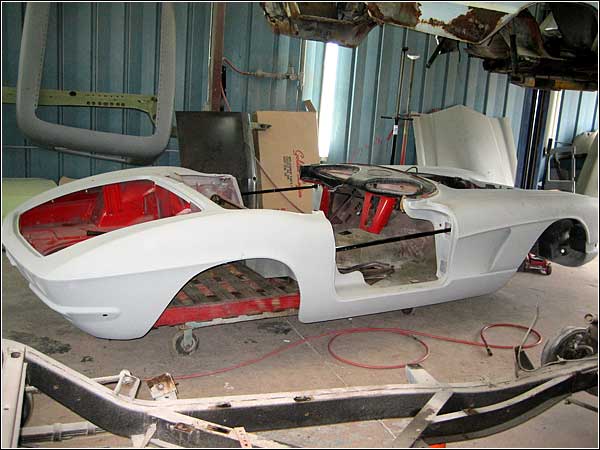
The archived Central Florida Customs metal and body page describes bare-metal assessment, repair of original panels where practical, full or partial replacement, butt-welded floor and trunk repairs, inner-structure protection and gap verification before final welding.
Metal work is not one operation. The scope may involve corrosion removal, localized fabrication, full panels, structural correction, mounting points, floor or trunk sections and the alignment work that makes adjacent panels behave as one body.
Locate perforation, swelling seams, moisture traps, brazed or overlapped patches, excessive filler and corrosion that extends beyond the visible opening.
Compare repair of original metal with used original or reproduction panels. Availability alone does not prove that a replacement will save time or preserve the right geometry.
Use opened panels as access to inspect, repair and coat braces, wheel housings, reinforcements and cavities that disappear after the exterior closes.
Reinstall related panels and reference hardware during mock-up. Doors, deck lids, hoods and fenders must be evaluated together before permanent welding.
Record corrosion from both sides where possible, measure alignment and determine whether the visible problem is local or evidence of a larger structural issue.
Remove coatings only with a method appropriate to the panel, substrate and next coating step. Protect newly exposed metal from flash corrosion.
Stabilize reference points, mounts and inner construction before exterior skin work. Sequence cuts so the body does not lose the geometry needed for alignment.
Clamp, measure and reinstall adjacent panels. Confirm openings, style lines and gaps before committing to the final weld sequence.
Finish welds appropriately, restore corrosion protection on accessible sides and recheck fit before fillers, surfacers and paint preparation begin.
| Factor | Question | Why it matters |
|---|---|---|
| Original vs replacement | Which option preserves fit and sound material? | Reproduction parts can require significant reshaping and gap correction. |
| Joint design | How will the repair be joined and protected? | The joint affects strength, appearance, moisture trapping and future corrosion. |
| Reference geometry | What must remain installed or braced? | Cutting without stable references can move openings and panel relationships. |
| Access | Can both sides of the repair be finished? | Hidden surfaces need protection before later assembly closes them. |
| Finish standard | Which repaired areas will remain visible? | Underside, trunk and engine-bay expectations change metal-finishing time. |
Coating removal and prior repair investigation determine how much sound metal actually remains.
Panel availability, shipping damage and correction time can make an apparently simple replacement labor-intensive.
Complex curves, body lines, access limitations and the need to fabricate missing geometry increase fitting time.
Opening inner structures creates an obligation to repair and protect what is found before the exterior panel closes again.
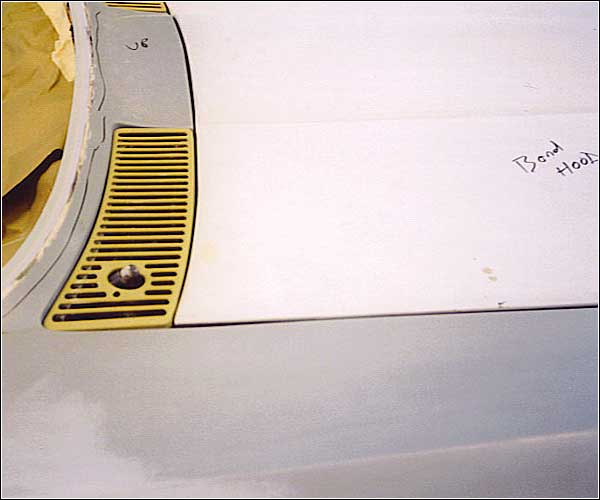
Often it is not. Corrosion can travel along seams, behind reinforcement and under previous filler. Scope should follow sound metal, not the size of the first visible hole.
No. Reproduction panels can solve severe damage, but their shape, stamping and edge details may require substantial correction. The best choice depends on the specific part.
Those panels establish openings, style lines and gaps. Final welding without them can lock in alignment problems that are costly to correct later.
An overlap can trap moisture and create an inaccessible shelf or seam. Joint selection and corrosion protection should be intentional for the location and structure.
Bare steel can begin oxidizing quickly in humid conditions. The coating plan should be ready before stripping so cleaned metal is protected without unnecessary delay.
No. The site documents the service direction and planning factors; vehicle fit, current capability and scheduling must be confirmed with Central Florida Customs directly.
Share photographs, known history, current configuration, intended use and the result you want. Scope and availability are confirmed directly.