TL;DR
- Conventional abrasive media can remove coatings and corrosion efficiently, but media type, pressure, angle, distance and dwell must suit the panel.
- Sodium bicarbonate is comparatively gentle on many substrates and useful for some coatings, but it is not the default choice for heavy corrosion and its residue must be managed for coating compatibility.
- Wet or dustless blasting suppresses airborne dust and can moderate heat, but it introduces water, slurry cleanup and flash-rust planning.
- Large, unsupported exterior panels deserve test areas and conservative technique because distortion or texture damage can be difficult to reverse.
- Surface preparation is complete only after contamination is removed, the required profile is verified and exposed metal receives the planned protection.
At-a-glance comparison
| Method | Useful strengths | Planning concerns |
|---|---|---|
| Dry abrasive media | Broad media choices; effective on rust and durable coatings when matched correctly | Dust, embedded media, surface profile and panel distortion from poor technique |
| Soda blasting | Gentle action on many surfaces; can remove some coatings with limited substrate profile | Residue removal, limited effectiveness on substantial rust, and coating-system acceptance |
| Wet or dustless blasting | Reduces airborne dust; water can help control heat and carry debris | Flash rust, slurry collection, drying, contamination control and immediate aftercare |
| Hand or machine stripping | Local control around edges, seams and sensitive areas | Labor time, access limits, dust or chemical residue depending on the tool |
| Chemical stripping | Can remove paint without aggressive mechanical impact on thin panels | Chemical handling, seam entrapment, neutralization or cleaning, and separate rust removal |
What does media blasting mean in auto restoration?
Media blasting is a broad term for propelling particles against a surface to remove coatings, corrosion or contamination and sometimes to create a profile for the next coating. The word media does not identify one process. Crushed glass, garnet, metal shot, plastic, organic material and other products behave differently.
The result also depends on the equipment and operator. Pressure, particle size, nozzle distance, angle, movement and time over one area change how energy reaches the panel. A media that works well on a frame or bracket can be unsuitable for a broad exterior skin when used with the same settings.
The goal should be stated as a surface condition, not simply “blast the car.” Different zones may need paint removal, corrosion removal, a particular coating profile or careful exposure of previous repairs. Defining the outcome allows the process to change where the material changes.
How can blasting distort classic car panels?
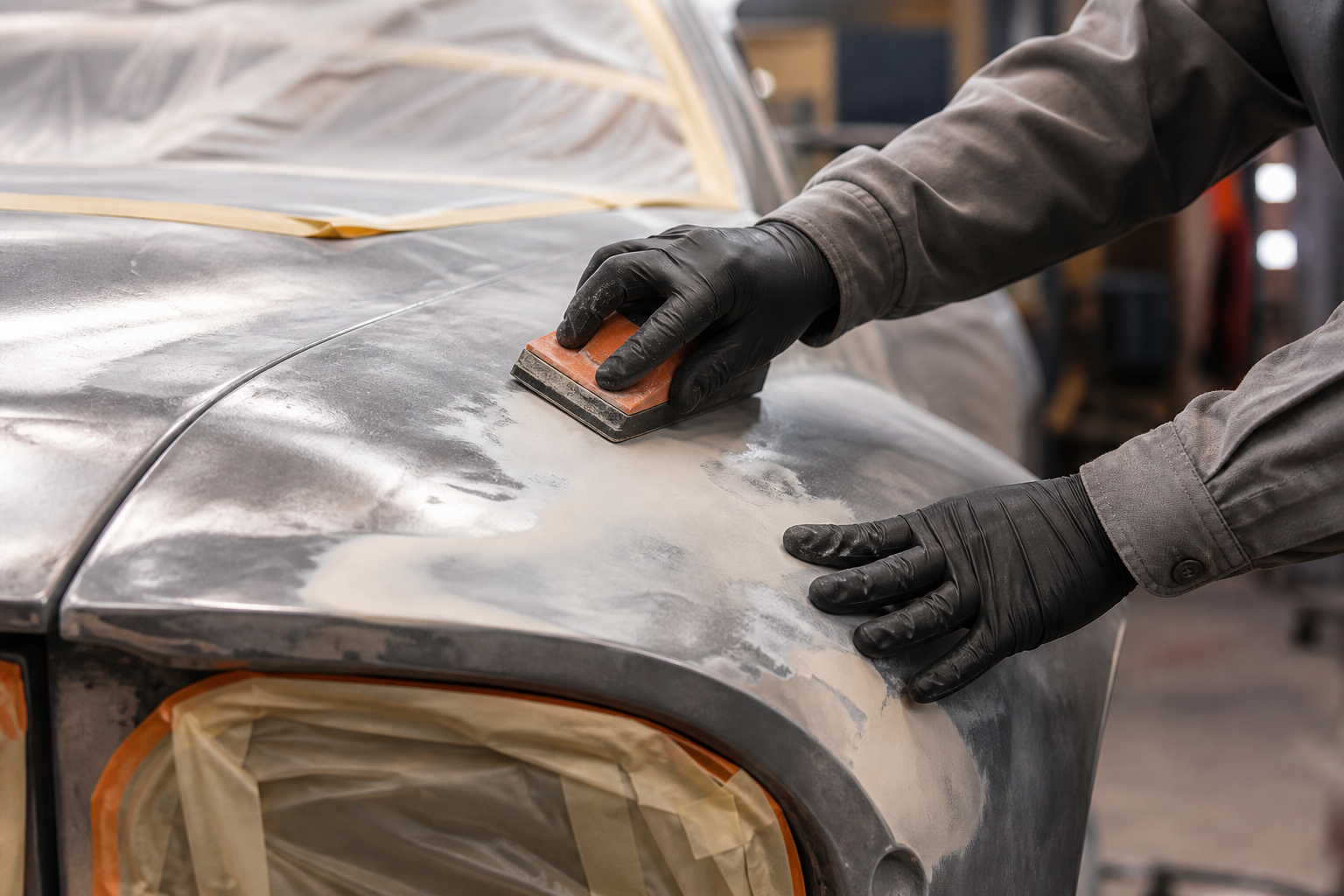
Thin sheet metal can change shape when too much energy is concentrated in a local area. Heat can contribute, but mechanical peening and stress are also part of the risk. Long dwell, close nozzle distance, aggressive angle, high pressure or media that is too hard for the surface can all worsen the outcome.
Large, low-crown panels deserve particular caution because small shape changes become visible in reflections and are labor-intensive to correct. Edges, body lines and supported areas behave differently from the middle of a broad panel. An experienced operator varies technique rather than treating the whole shell as one uniform target.
A test panel or hidden representative area is useful, but it does not eliminate the need for control. The shop should be able to explain where blasting will be used, where another method will take over and how the operator watches for surface change.
When is conventional abrasive media a good fit?
Dry abrasive blasting can be effective on frames, suspension pieces, brackets, wheels, inner structures and corrosion that needs more cutting action. The media and settings should be matched to the substrate and desired profile. Durable parts can often tolerate a more productive process than an exterior body skin.
The method also reveals condition quickly. Once coatings and loose corrosion are gone, cracks, pits, previous welds and patches become easier to map. That information can change the metal-repair scope, which is why blasting should occur at a planned decision gate rather than after replacement panels and finish dates are already committed.
Containment and cleanup are essential. Abrasive can enter seams, rails and cavities, then emerge during paint or assembly. Openings should be managed before blasting, and the cleanup process should include areas that cannot be seen from the work surface.
What are the advantages and limits of soda blasting?
Soda blasting uses sodium bicarbonate particles. Its relatively gentle cutting behavior can make it useful for removing some coatings while limiting attack on certain substrates. It can be considered around delicate details where a more aggressive abrasive would create an unwanted profile.
It is not a universal rust-removal method. Substantial corrosion may require another abrasive or a separate mechanical process. A surface that is free of paint but still contains corrosion has not reached the metal-preparation target. The project should state how remaining rust will be identified and removed.
Residue is a central planning issue. Cleaning must follow the coating manufacturer’s requirements, and the selected primer system should explicitly accept the prepared surface. Assuming that visible dust removal is enough can put adhesion at risk. The process owner should define verification before primer is applied.
What does dustless blasting change?
Dustless blasting is commonly used to describe wet abrasive systems that introduce water into the media stream. The water helps suppress airborne dust and can carry removed material away from the surface. It can also help moderate temperature at the work area.
Reduced dust does not mean no containment or no health risk. The removed coating and media still become waste, now in a wet slurry. The work plan must address collection, surrounding property, drains, soil, personal protection and the hazards of the coating being removed.
Water changes the aftercare. Bare steel can develop flash rust, and trapped moisture can remain in seams or cavities. The process needs an approved inhibitor strategy if used, thorough drying, inspection and a compatible coating schedule. Those steps should be decided before the first panel is stripped.
Are old automotive coatings a health concern?
Yes, unknown coatings and the blasting material can create hazardous dust or slurry. OSHA notes that abrasive blasting can expose workers to dust, noise and toxic materials from both the abrasive and the underlying substrate or coating. Automotive refinishing work can also involve hazardous metals and other chemicals.
The age of a classic vehicle does not reveal the complete coating history. A car may contain factory finishes, old primers, filler, undercoating and several later repaints. Workplaces should assess the materials and use appropriate engineering controls, containment, respiratory protection and waste practices.
Owners should not choose a method solely because it is marketed as cleaner. Ask where the removed material goes, how the work area is controlled and how adjacent people, vehicles and property are protected. Safety planning is part of process quality.
What should happen immediately after stripping?
First, inspect the exposed substrate under suitable light. Mark corrosion, perforation, thinning, cracks, old welds, filler boundaries and distortion. Photograph the findings before new coatings hide them. This condition map should connect directly to the next estimate or change decision.
Next, remove the contamination created by the chosen process. Dry media, soda residue, water, slurry, oil and handling contamination require different responses. Follow the technical data for the coating system rather than using a generic cleaner by habit. Confirm that seams and cavities are included.
Finally, protect the surface on schedule. Bare metal condition can change with humidity, handling and time. The plan may use a compatible primer or another approved temporary protection while metal work continues. Any product applied before welding, filler or final primer must fit the later sequence.
Can one classic car use several stripping methods?
Often that is the most controlled approach. A frame can receive an abrasive suited to heavy structure, broad exterior skins can use a gentler mechanical or chemical method, and tight details can be finished by hand. Fiberglass, aluminum and plated components may require separate treatment from steel.
A mixed-method plan should still produce a consistent condition for the next stage. Record which process was used in each zone, how it was cleaned and which coating will follow. This prevents a painter from assuming every bare-looking surface has the same profile or residue history.
Ask the restoration and coating teams to agree on the plan. When stripping is outsourced, define delivery condition, masking, turnaround, flash-rust responsibility and the evidence that should be preserved. The lowest stripping quote can become expensive if the returned body needs extensive re-cleaning or correction.
Step-by-step checklist
Identify the substrate and coating stack
Confirm whether the surface is steel, aluminum, fiberglass or another material. Determine what coatings, filler, undercoating and corrosion are present. Unknown old finishes may require hazard assessment before removal.
Divide the vehicle into surface zones
Separate heavy structure, brackets, cast parts, inner panels, unsupported exterior skins, seams and nonmetal components. One vehicle can require several removal methods because these zones react differently.
Choose the following coating system first
Ask the primer or coating manufacturer what cleanliness, profile and residue conditions are required. The removal method should deliver a surface the next product can accept, not merely a surface that looks bare.
Run a controlled test area
Use a representative, low-risk area to confirm removal rate, surface texture, residue and cleanup. Adjust media, pressure, distance, angle and dwell before moving to broad or visible panels.
Protect cavities and adjacent systems
Remove or isolate glass, trim, bearings, mechanical assemblies, wiring, seams and openings that can trap media or slurry. Plan how every protected or opened area will be inspected and cleaned afterward.
Inspect, clean and coat on a defined clock
After stripping, remove contamination, dry the surface where water is involved and inspect for corrosion, filler and previous repairs. Apply the compatible temporary or permanent protection according to the coating plan before the surface condition changes.
What to remember
- Choose removal methods by surface zone and coating requirement, not by one label for the whole car.
- Treat operator settings and dwell time as part of the method.
- Verify how soda residue or wet-process moisture will be removed before coating.
- Plan containment and worker protection around the unknown coating as well as the blasting media.
- Inspect and document exposed metal before compatible protection hides the findings.
Frequently asked questions
What is the safest blasting method for classic car sheet metal?
There is no universal safest method. Panel shape, support, substrate, coating and operator control determine risk. Use a test area and a zone-specific plan.
Will soda blasting remove rust?
It may remove light surface contamination, but soda is generally not the first choice for substantial corrosion. Verify the remaining metal and use a suitable follow-up process where rust remains.
Does dustless blasting prevent panel warping?
Water can help moderate heat, but it does not remove all distortion risk. Pressure, angle, media, dwell and panel support still matter.
Can a blasted body wait before primer?
Bare metal can change with humidity, contamination and handling. The coating plan should define cleaning, inspection and the acceptable time to compatible protection.
Should the entire assembled car be blasted?
Sensitive systems, glass, trim, bearings, wiring and cavities can be damaged or contaminated. Disassembly and masking should follow a specific zone plan rather than blasting an assembled vehicle indiscriminately.
Is chemical stripping better than blasting?
It can be useful on sensitive sheet metal, but it introduces chemical handling and residue concerns and may not remove corrosion. Many restorations combine methods.
Sources and further reading
Use these primary and industry resources to verify current rules and technical guidance.
Start with a clear scope.
Bring the vehicle details, condition evidence and intended use to the first conversation.