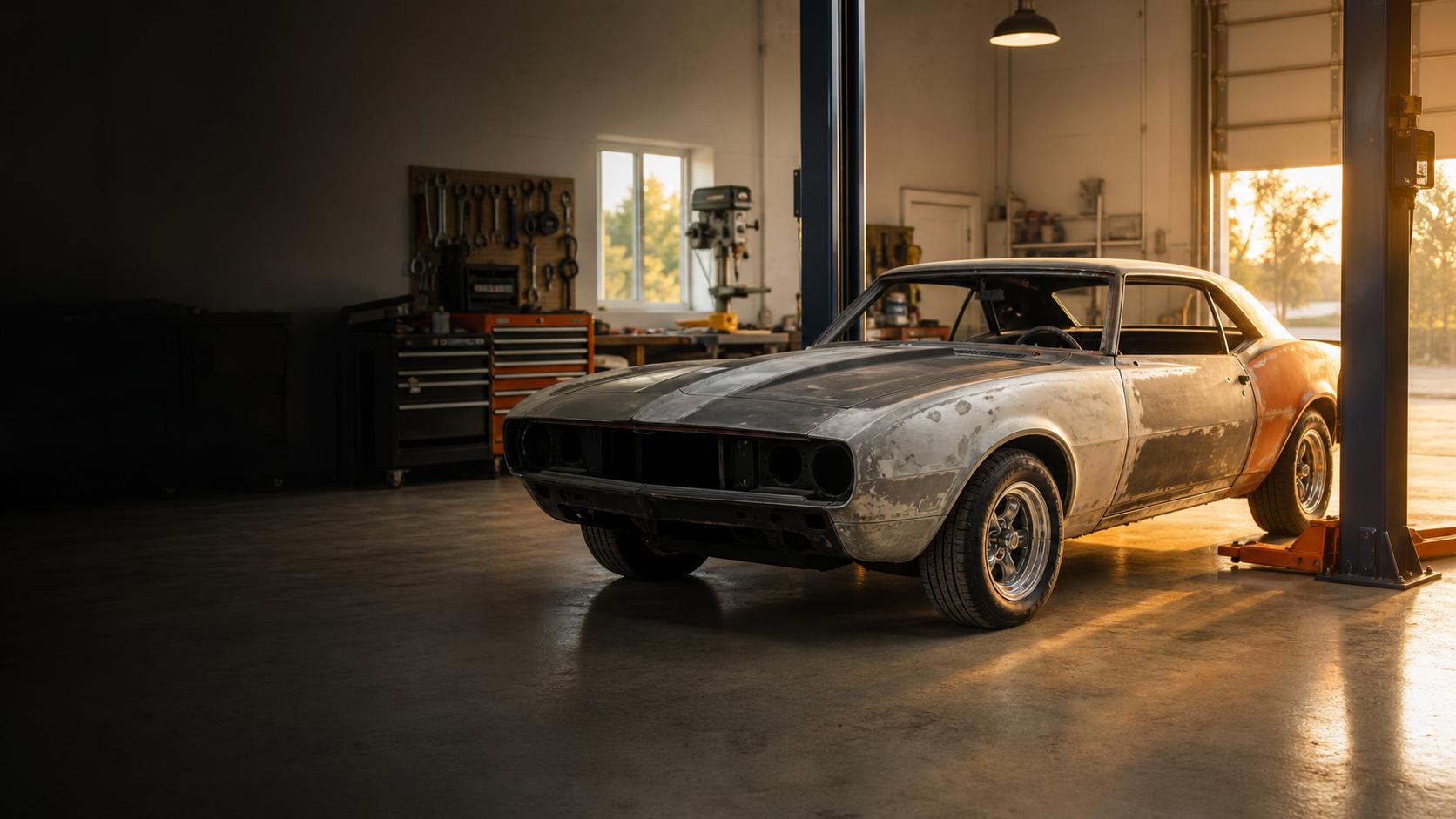
TL;DR
- Traditional restoration prioritizes period-correct appearance, materials, components and driving character.
- A restomod keeps the classic form while deliberately changing systems for the way the owner plans to use it.
- The best direction depends on the starting vehicle, intended use, significance, documentation and tolerance for modification.
- Integrated systems matter more than a list of upgrades; brakes, tires, steering, suspension, cooling, fuel and electrical choices affect one another.
- Write a build philosophy before buying major parts so later decisions follow one coherent target.
At-a-glance comparison
| Decision area | Traditional restoration | Restomod |
|---|---|---|
| Primary goal | Recover a period-correct or factory-informed presentation | Adapt a classic platform to a defined modern use |
| Original parts | Retained, repaired or accurately reproduced when practical | Retained where they support the concept; replaced where upgrades are intentional |
| Driving character | Closer to the vehicle’s original feel and limitations | Can emphasize comfort, control, power, efficiency or touring range |
| Engineering focus | Authenticity, correct fit and historical detail | System compatibility, packaging, calibration and service access |
| Documentation | Supports provenance and explains deviations from factory form | Records specifications, wiring, part numbers and integration choices |
| Future changes | Often constrained by the originality target | Easier when the build uses documented, serviceable components |
What does a traditional classic car restoration prioritize?
A traditional restoration aims to recover the vehicle’s original design, specification and visual language. The exact target can vary. Some owners want a factory-informed driver with sensible service replacements, while others pursue highly detailed authenticity. Both can be restorations if the scope clearly states where correctness matters and where practical substitutions are accepted.
The work begins with research. Build dates, trim codes, assembly details, model-year changes and original documentation help establish what belongs on the car. Existing parts are inventoried before replacement because a worn original component may contain details that are difficult to reproduce. The shop and owner decide what can be rebuilt, what must be sourced and what can be replicated responsibly.
Driving character is part of the result. Original steering effort, braking response, cabin noise, gearing and ventilation can feel very different from a modern vehicle. An owner who wants that historical experience may view those traits as the point of the car. An owner who expects effortless daily use may find the same traits frustrating.
What makes a project a restomod?
A restomod combines a recognizable classic vehicle with intentional mechanical, electrical or comfort changes. The term describes a broad category, not a fixed parts list. One project may add discreet reliability improvements while retaining nearly all of the original appearance. Another may use a contemporary drivetrain, revised suspension geometry, modern climate control and a redesigned interior.
The strongest restomods feel coherent. The controls, power delivery, braking, tire capability, ride and cooling system should support the same intended use. Visual choices should relate to the body rather than looking like unrelated catalog additions. A coherent build can be subtle or dramatic, but it has a reason for every major change.
Modern components do not automatically create modern behavior. Their performance depends on mounting, geometry, calibration, wiring, airflow and compatibility with the vehicle around them. A collection of premium parts can still produce a car that overheats, tracks poorly or is difficult to service if those interfaces are not planned.
Which starting vehicles favor preservation?
Completeness, provenance and scarcity should influence the decision before irreversible work begins. A vehicle with original finishes, matching documentation or unusual factory content can have value as historical evidence even when it is not cosmetically perfect. Preservation may protect details that a full teardown would erase.
This does not mean every original part must remain in service regardless of condition. Safety, reliability and legal requirements still matter. It means the owner should understand what is present, document it and make changes deliberately. Reversible upgrades and carefully stored original parts can sometimes balance use with stewardship.
A specialist familiar with the marque can help identify details that are not obvious. Club reference material, factory manuals and historical photographs can clarify whether an unusual component is incorrect, a production variation or a later period modification worth keeping.
Which starting vehicles give a restomod more freedom?
An incomplete vehicle, a car with major previous modifications or a shell missing difficult-to-source systems may not offer much original configuration to preserve. In those cases, a restomod can create a clear and useful new identity rather than attempting an inaccurate reconstruction.
Condition still matters. A restomod does not bypass structural restoration. Added power, grip and braking demand a sound body, chassis and mounting points. Corrosion, poor collision repairs and weak previous modifications should be corrected before higher loads are introduced.
Parts availability also affects freedom. A platform with proven component combinations and good technical support can be easier to integrate and maintain. Unusual one-off choices can still work, but the build should include drawings, part numbers and service information for the future owner or technician.
How do you compare cost without relying on a generic price?
Neither direction is automatically less expensive. A traditional restoration can require rare components, specialized finishes and extensive detail work. A restomod can require engineering, fabrication, wiring, calibration and repeated mock-up. The starting condition and finish standard often matter more than the label.
Compare the work breakdown instead of using a broad category name. For a restoration, identify research, original-part rebuilding, sourcing and authenticity requirements. For a restomod, identify component packaging, structural changes, system integration, testing and documentation. Both still need body, paint, trim and assembly decisions.
Budget for decision quality as well as parts. Mock-up before finish work, documented measurements and early compatibility checks can appear slower than immediate assembly, but they reduce the chance of cutting finished panels or replacing newly purchased components later.
Why should safety upgrades be treated as engineering?
Brakes, steering, seats and restraints operate through geometry and structure. A component cannot be judged only by its marketing description. Mounting strength, occupant position, pedal ratio, tire grip, suspension travel and the behavior of the whole vehicle matter. Changes should be designed and installed by people qualified for the work.
For example, the National Highway Traffic Safety Administration advises owners of older vehicles with lap belts to check with the manufacturer about safer lap-and-shoulder belt retrofit options. That guidance illustrates the right mindset: fit and approved application matter. A belt attached to an unsuitable point can create a false sense of security.
Power changes deserve the same systems view. More output may increase cooling demand, driveline load, fuel delivery requirements and the speed the brakes must manage. The build plan should connect those consequences before parts are ordered.
How does each direction affect value and resale?
Collector value is vehicle-specific and market conditions change. Originality can matter greatly for one model and less for another. A high-quality restomod may appeal to buyers who want usability, but its specification also reflects one owner’s taste. Avoid treating either direction as a guaranteed investment strategy.
Documentation supports both paths. A restoration benefits from photographs, component records, receipts and research that explain authenticity. A restomod benefits from wiring diagrams, alignment specifications, calibration details, part numbers and service procedures. Good records reduce uncertainty for a future owner.
If resale flexibility matters, avoid choices that are difficult to reverse without a strong reason. Store valuable original parts properly, label them and include them in the project record. The option to understand or reverse a change can be meaningful even if the current owner never plans to do so.
Can you combine restoration and restomod thinking?
Yes, but the result still needs a hierarchy. A factory-looking car can use carefully concealed reliability changes. A modified touring build can preserve the body, trim and interior language while updating systems underneath. The risk is not mixing approaches; it is making each decision independently until the car has no clear character.
Write down the boundaries. Perhaps exterior sheet metal and interior appearance must remain period-correct while cooling, charging and braking can change. Perhaps the body can be modified but all work must remain serviceable without proprietary one-off parts. Boundaries give designers and fabricators a shared standard.
Review the plan again after disassembly. The vehicle may reveal unusual original material or previous alterations that change the balance. A documented project can adapt without losing its central purpose.
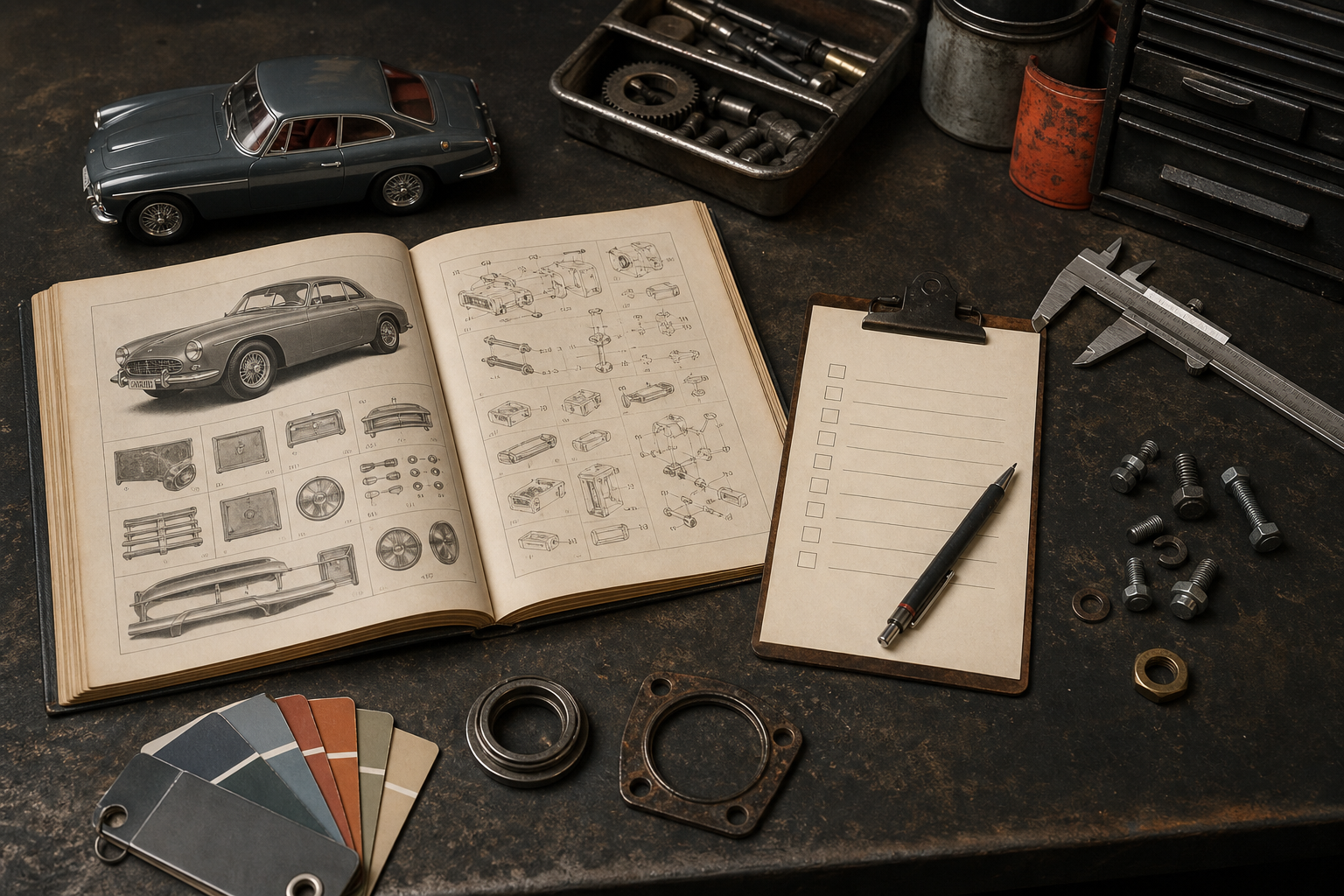
Step-by-step checklist
Define how the car will be used
Write down the roads, distances, weather, passengers and events the vehicle must handle. A car built for local shows has different needs from one expected to cruise on the highway, sit in summer traffic or travel with luggage.
Evaluate the starting vehicle
Document originality, condition, completeness, provenance and previous modifications. A highly complete and significant example may justify preservation. An incomplete or heavily altered project may offer more freedom without sacrificing scarce original material.
Rank originality and usability
Decide which factory characteristics are essential and which ownership frustrations you want to remove. Rank the priorities instead of calling all of them equally important. The ranking becomes a filter for every later part choice.
Map the vehicle as connected systems
Treat the engine, transmission, fuel delivery, cooling, electrical capacity, brakes, suspension, steering, wheels and tires as one package. A change in one area can alter loads, space, heat, gearing, traction and service access elsewhere.
Review safety and legal constraints
Discuss proposed modifications with qualified professionals and check the rules that apply to the vehicle and its intended use. Safety equipment needs suitable structure and geometry; it should not be treated as a decorative add-on.
Freeze the build philosophy before purchasing
Summarize the chosen direction in a short document. Approve major components only when they serve that direction and work with the rest of the package. This limits expensive changes caused by collecting attractive parts without an integration plan.
What to remember
- Preserve a significant, complete vehicle only after documenting what makes it important.
- Choose a restomod for a defined use, not simply because modern parts are available.
- Evaluate every upgrade as part of an interacting vehicle system.
- Treat restraint, brake, steering and structural changes as safety engineering.
- Document specifications and decisions so the finished car remains understandable and serviceable.
Frequently asked questions
Is a restomod the same as a restored classic car?
No. A restoration is guided primarily by an original or period-correct specification. A restomod intentionally changes systems or features to meet a new ownership goal while retaining a classic identity.
Does a restomod always need a modern engine?
No. A restomod can retain the original engine and update cooling, ignition, braking, suspension, electrical or comfort systems. The category is defined by the integrated intent, not one component.
Will modifying a classic car always reduce its value?
No universal rule applies. Value depends on the model, originality, significance, execution, documentation and the buyers active at the time. Irreversible changes can narrow the future audience.
Can I add air conditioning and still call the car restored?
Terminology matters less than honest documentation. A factory-style restoration with a discreet comfort upgrade can be described clearly as restored with modifications rather than presented as completely original.
Should I keep the original parts removed during a restomod?
Keep significant, identifiable original parts when storage is practical. Label their location and condition, and include them in the project record. They may support future service, research or reversal.
Which direction is better for frequent highway driving?
A build planned around highway use may prioritize gearing, cooling, braking, tires, seating and electrical reliability. That can be achieved through a restomod or a carefully selected set of reversible upgrades, depending on the vehicle.
Sources and further reading
Use these primary and industry resources to verify current rules and technical guidance.
Start with a clear scope.
Bring the vehicle details, condition evidence and intended use to the first conversation.