TL;DR
- Write intended use and preserved character as non-negotiable requirements.
- Inspect the donor car before building a parts list.
- Map drivetrain, cooling, fuel, electrical, brakes, steering, suspension and tires together.
- Mock up physical and control interfaces before paint and upholstery.
- Document service parts, wiring, calibration and irreversible changes.
At-a-glance comparison
| Gate | Question to answer | Evidence before approval |
|---|---|---|
| Direction | What should stay classic and what should change? | Written use case and preservation list |
| Donor condition | Is the structure suitable for the target? | Inspection, measurements and corrosion map |
| Architecture | Do the systems form a compatible package? | Component map, calculations and interfaces |
| Mock-up | Does everything fit and remain serviceable? | Physical installation and clearance checks |
| Commissioning | Does the finished car behave as designed? | Staged tests, settings and documentation |
Define the finished driving experience
“Modern” can mean easier starting, highway rpm, air conditioning, braking confidence, handling, power or all of them. The useful question is not whether a popular component or procedure can be installed, but whether it solves the stated problem on this particular vehicle. Describe a typical trip, traffic, road, weather, passenger and maintenance scenario. Record the current condition and the intended result before the build commits to parts, fabrication or finish work. That baseline gives the owner and shop something concrete to compare when a discovery or alternative changes the plan.
Without a prioritized use case, the build can accumulate expensive upgrades that do not improve the owner’s real experience. This is where an isolated decision can create downstream work in packaging, materials, controls, alignment, service access or later repair. Rank capabilities and state which compromises are acceptable. Put that decision in writing, identify what evidence would cause it to change and confirm which other systems must be checked before approval. The extra discipline is small compared with redoing finished work because an assumption was treated as a fact.
Identify character to preserve
A restomod succeeds when the classic qualities the owner values remain intentional. The useful question is not whether a popular component or procedure can be installed, but whether it solves the stated problem on this particular vehicle. List exterior, interior, sound, controls, stance, trim and driving traits that should remain recognizable. Record the current condition and the intended result before the build commits to parts, fabrication or finish work. That baseline gives the owner and shop something concrete to compare when a discovery or alternative changes the plan.
Permanent changes made without this boundary can erase the reason the owner chose the car. This is where an isolated decision can create downstream work in packaging, materials, controls, alignment, service access or later repair. Classify each proposed change as preserved, reversible or intentionally permanent. Put that decision in writing, identify what evidence would cause it to change and confirm which other systems must be checked before approval. The extra discipline is small compared with redoing finished work because an assumption was treated as a fact.
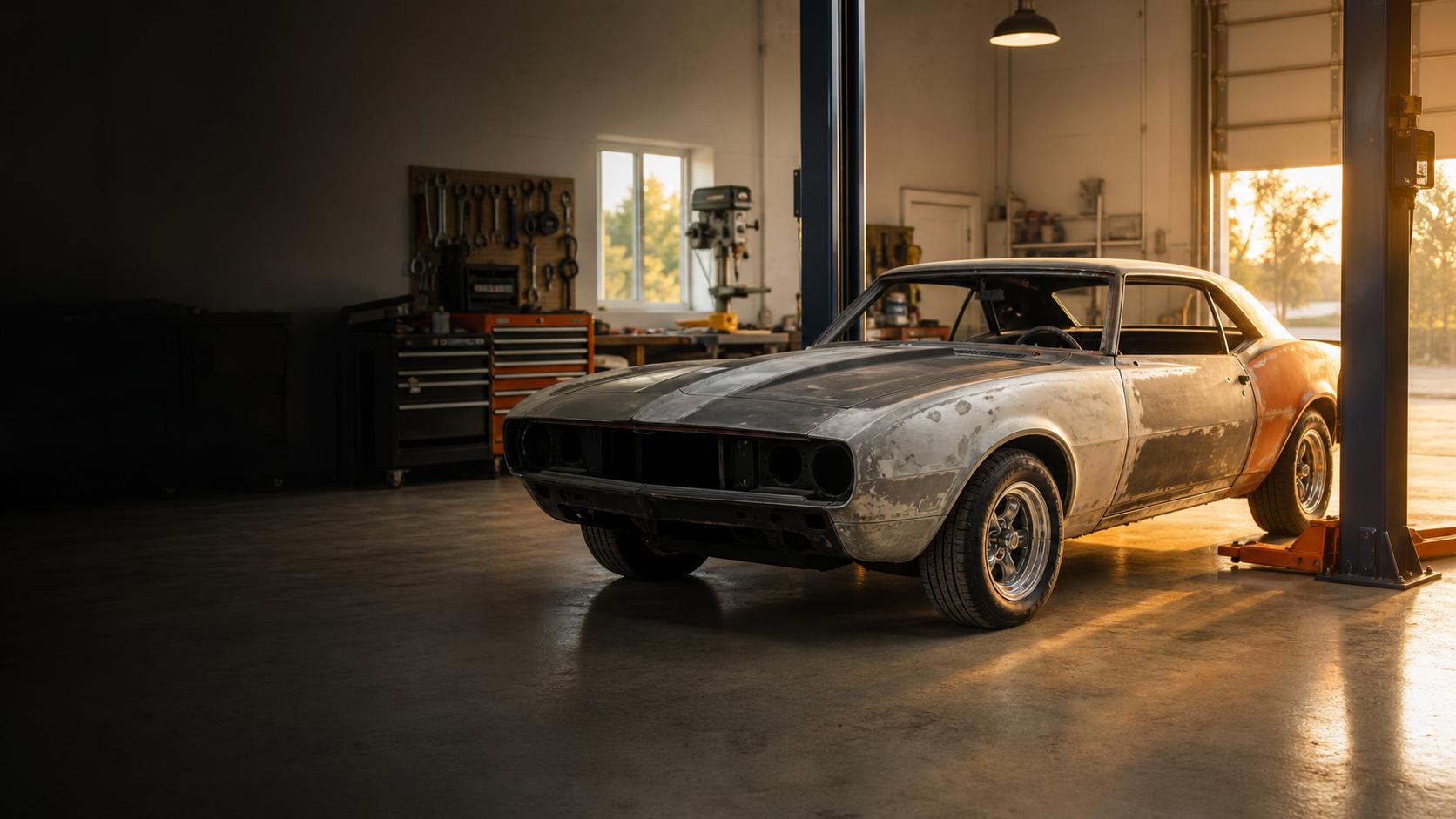
Inspect the donor before designing around it
Rust, prior repair, missing parts and altered geometry can change which architecture is practical. The useful question is not whether a popular component or procedure can be installed, but whether it solves the stated problem on this particular vehicle. Document structure, mounts, body fit, drivetrain, electrical, steering, suspension, brakes and title-relevant identifiers. Record the current condition and the intended result before the build commits to parts, fabrication or finish work. That baseline gives the owner and shop something concrete to compare when a discovery or alternative changes the plan.
A component plan created before condition access may need redesign after disassembly. This is where an isolated decision can create downstream work in packaging, materials, controls, alignment, service access or later repair. Set a discovery gate and do not finalize irreversible systems until critical condition questions are answered. Put that decision in writing, identify what evidence would cause it to change and confirm which other systems must be checked before approval. The extra discipline is small compared with redoing finished work because an assumption was treated as a fact.
Build one system map
Engine, transmission, axle, cooling, fuel, exhaust, electrical, brakes, steering, suspension, wheels, tires and controls share space and loads. The useful question is not whether a popular component or procedure can be installed, but whether it solves the stated problem on this particular vehicle. Draw physical, electrical, hydraulic and control interfaces between every major package. Record the current condition and the intended result before the build commits to parts, fabrication or finish work. That baseline gives the owner and shop something concrete to compare when a discovery or alternative changes the plan.
Parts that work separately can conflict in the vehicle through clearance, signals, gearing, heat or service access. This is where an isolated decision can create downstream work in packaging, materials, controls, alignment, service access or later repair. Assign ownership for every interface instead of assuming vendors solved it. Put that decision in writing, identify what evidence would cause it to change and confirm which other systems must be checked before approval. The extra discipline is small compared with redoing finished work because an assumption was treated as a fact.
Mock up before finish
Paint, upholstery and final coatings make later cutting, welding and rerouting expensive and risky. The useful question is not whether a popular component or procedure can be installed, but whether it solves the stated problem on this particular vehicle. Install or accurately represent drivetrain, accessories, radiator, exhaust, steering, pedals, wiring paths, wheels, glass, trim and interior controls. Record the current condition and the intended result before the build commits to parts, fabrication or finish work. That baseline gives the owner and shop something concrete to compare when a discovery or alternative changes the plan.
Late discoveries can damage finish or force compromised routing because the best access is gone. This is where an isolated decision can create downstream work in packaging, materials, controls, alignment, service access or later repair. Create a complete mock-up approval checklist before body and interior finish stages. Put that decision in writing, identify what evidence would cause it to change and confirm which other systems must be checked before approval. The extra discipline is small compared with redoing finished work because an assumption was treated as a fact.
Plan diagnostics and future service
A custom vehicle needs a service map that no factory manual supplies. The useful question is not whether a popular component or procedure can be installed, but whether it solves the stated problem on this particular vehicle. Record part numbers, suppliers, wiring, fuse and relay locations, software, calibration, fluids, filters, belts and alignment settings. Record the current condition and the intended result before the build commits to parts, fabrication or finish work. That baseline gives the owner and shop something concrete to compare when a discovery or alternative changes the plan.
A minor future failure can immobilize the car when replacement and diagnostic information exists only in the builder’s memory. This is where an isolated decision can create downstream work in packaging, materials, controls, alignment, service access or later repair. Treat the documentation package as a required deliverable. Put that decision in writing, identify what evidence would cause it to change and confirm which other systems must be checked before approval. The extra discipline is small compared with redoing finished work because an assumption was treated as a fact.
Step-by-step checklist
Write the restomod brief
Describe intended use, preserved character, desired capabilities and unacceptable compromises.
Inspect and measure the donor
Map condition, geometry, existing modifications and available packaging before selecting systems.
Choose the architecture
Select compatible drivetrain, chassis, cooling, fuel, electrical, controls, wheels and tires.
Resolve all interfaces
Assign every mount, signal, line, hose, clearance and service-access responsibility.
Complete the mock-up gate
Verify the whole vehicle before final paint, coatings, upholstery and permanent routing.
Commission and document
Test progressively, record settings and deliver a complete service and parts dossier.
What to remember
- Plan from the driving experience backward.
- Preserve character intentionally.
- Inspect before finalizing architecture.
- Interface ownership is the core of integration.
- Documentation turns a custom build into a serviceable car.
Frequently asked questions
How is a restomod plan different from a restoration plan?
A restomod intentionally redesigns selected vehicle behavior and systems, so compatibility and permanent-change decisions become a larger part of the scope.
Should a chassis be ordered before the donor is stripped?
Not until critical measurements, condition and body architecture are verified. The required solution depends on the actual vehicle.
Can modern air conditioning be added later?
It can, but planning it early protects dashboard, engine accessory, cooling, electrical, hose-routing and interior decisions.
How much of the original car should be retained?
That is an owner and vehicle-specific decision. Write the preservation boundary before fabrication so changes are deliberate.
What is the most common planning mistake?
Selecting headline components independently and assuming mounts, controls, cooling, exhaust, brakes and service access will resolve themselves.
What documents should a restomod have?
Keep a parts list, wiring diagram, calibration files, fuse and relay map, fluid and filter list, alignment settings, paint information and photographs of hidden routing.
Sources and further reading
Use these primary and industry resources to verify current rules and technical guidance.
Start with a clear scope.
Bring the vehicle details, condition evidence and intended use to the first conversation.