TL;DR
- Write the design brief before choosing exact products.
- Use the assembled car and full-scale references to place graphics.
- Approve physical color samples under sun, shade and artificial light.
- Map every paint layer and clear cycle before spraying starts.
- Record formulas, dimensions and reference points for repair and reassembly.
At-a-glance comparison
| Decision | Weak approval method | Better approval evidence |
|---|---|---|
| Main color | Phone or computer image | Physical spray-out with intended material stack |
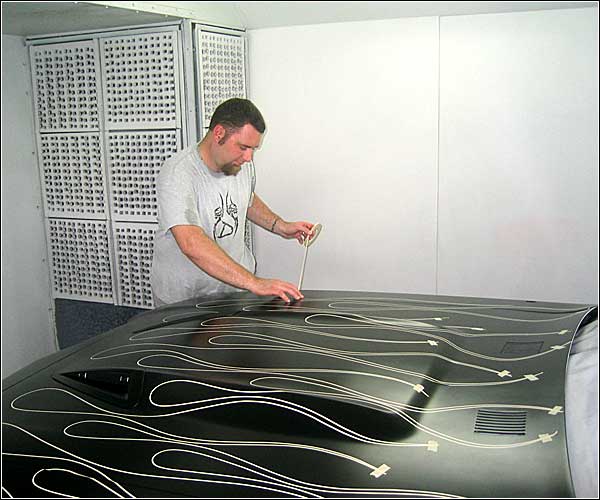
| Stripe placement | Small sketch only | Full-scale tape layout on assembled panels |
| Two-tone break | Panel viewed in isolation | Whole-car view at ride height |
| Graphic edge | Verbal description | Measured reference points and mock-up |
| Final gloss | Color chip | Cleared and polished sample |
Write a hierarchy for the design
A successful custom finish has a primary read, supporting details and controlled areas of visual rest. The useful question is not whether a popular component or procedure can be installed, but whether it solves the stated problem on this particular vehicle. List the main color, secondary color, graphic, accent and finish elements in order of importance. Record the current condition and the intended result before the build commits to parts, fabrication or finish work. That baseline gives the owner and shop something concrete to compare when a discovery or alternative changes the plan.
Adding independent ideas without hierarchy can make the vehicle look fragmented and difficult to execute consistently. This is where an isolated decision can create downstream work in packaging, materials, controls, alignment, service access or later repair. Remove or subordinate any element that competes with the stated focal point. Put that decision in writing, identify what evidence would cause it to change and confirm which other systems must be checked before approval. The extra discipline is small compared with redoing finished work because an assumption was treated as a fact.
Use the body as the canvas
Stripes and breaks interact with peaks, valleys, wheel openings, handles, trim and panel gaps. The useful question is not whether a popular component or procedure can be installed, but whether it solves the stated problem on this particular vehicle. View the assembled vehicle at ride height from front, rear, side and three-quarter angles. Record the current condition and the intended result before the build commits to parts, fabrication or finish work. That baseline gives the owner and shop something concrete to compare when a discovery or alternative changes the plan.
A line that works in a flat rendering can dive, thicken or visually disconnect when it crosses a compound curve. This is where an isolated decision can create downstream work in packaging, materials, controls, alignment, service access or later repair. Tape the design at full scale and approve photographs from all important viewing angles. Put that decision in writing, identify what evidence would cause it to change and confirm which other systems must be checked before approval. The extra discipline is small compared with redoing finished work because an assumption was treated as a fact.
Approve color as a physical material
Metallic orientation, pearl flop, candy depth and clear change with light and application. The useful question is not whether a popular component or procedure can be installed, but whether it solves the stated problem on this particular vehicle. Compare spray-outs in direct sun, open shade, overcast light and the artificial lighting likely to surround the finished car. Record the current condition and the intended result before the build commits to parts, fabrication or finish work. That baseline gives the owner and shop something concrete to compare when a discovery or alternative changes the plan.
A screen reference may be color-managed differently and cannot reproduce every reflective effect. This is where an isolated decision can create downstream work in packaging, materials, controls, alignment, service access or later repair. Sign and retain the chosen spray-out as the controlling color reference. Put that decision in writing, identify what evidence would cause it to change and confirm which other systems must be checked before approval. The extra discipline is small compared with redoing finished work because an assumption was treated as a fact.
Coordinate paint with wheels, trim and interior
The same paint can feel different beside warm chrome, black trim, polished metal, wheel finish and upholstery. The useful question is not whether a popular component or procedure can be installed, but whether it solves the stated problem on this particular vehicle. Assemble physical or accurate material samples instead of evaluating each selection alone. Record the current condition and the intended result before the build commits to parts, fabrication or finish work. That baseline gives the owner and shop something concrete to compare when a discovery or alternative changes the plan.
Late wheel or interior changes can introduce undertones that fight the approved exterior palette. This is where an isolated decision can create downstream work in packaging, materials, controls, alignment, service access or later repair. Create one materials board and document which sample controls each finish. Put that decision in writing, identify what evidence would cause it to change and confirm which other systems must be checked before approval. The extra discipline is small compared with redoing finished work because an assumption was treated as a fact.
Map the production sequence
Every color, graphic, intercoat and clear layer creates masking, edge and timing requirements. The useful question is not whether a popular component or procedure can be installed, but whether it solves the stated problem on this particular vehicle. Write the order from sealer through final clear, including which panels are together, when tape is removed and where overspray must be controlled. Record the current condition and the intended result before the build commits to parts, fabrication or finish work. That baseline gives the owner and shop something concrete to compare when a discovery or alternative changes the plan.
A design that ignores the spray sequence can require excessive film build or impossible masking transitions. This is where an isolated decision can create downstream work in packaging, materials, controls, alignment, service access or later repair. Simplify or revise artwork until the painter can describe a repeatable layer plan. Put that decision in writing, identify what evidence would cause it to change and confirm which other systems must be checked before approval. The extra discipline is small compared with redoing finished work because an assumption was treated as a fact.
Plan for repair and documentation
Custom color and graphics are harder to reproduce after a chip, scratch or panel repair. The useful question is not whether a popular component or procedure can be installed, but whether it solves the stated problem on this particular vehicle. Record formulas, variants, spray-out samples, stripe widths, reference measurements and layer order. Record the current condition and the intended result before the build commits to parts, fabrication or finish work. That baseline gives the owner and shop something concrete to compare when a discovery or alternative changes the plan.
Without those records, even a skilled repairer must reverse-engineer the design from an aged finish. This is where an isolated decision can create downstream work in packaging, materials, controls, alignment, service access or later repair. Include a compact finish dossier with the vehicle’s final documentation. Put that decision in writing, identify what evidence would cause it to change and confirm which other systems must be checked before approval. The extra discipline is small compared with redoing finished work because an assumption was treated as a fact.
Step-by-step checklist
Create a one-page design brief
Describe the intended character, focal point, colors to avoid, trim direction and how bold the result should feel.
Collect constrained references
Choose a small set of examples and annotate exactly what is relevant in each one.
Mock up the assembled vehicle
Use renderings for exploration, then full-scale tape and body references for approval.
Build and compare spray-outs
Test the proposed ground coat, color, effect and clear under multiple lighting conditions.
Write the layer sequence
Resolve masking, panel order, graphics, intermediate clear and final clear before application.
Archive the final specification
Keep formulas, samples, measurements, photographs and approval records with the car.
What to remember
- Design the whole vehicle, not isolated panels.
- Approve effects physically rather than on screens.
- Coordinate exterior color with real adjacent materials.
- Make the graphic executable before making it elaborate.
- Documentation is part of a repairable custom finish.
Frequently asked questions
Can a rendering replace a spray-out?
No. A rendering is useful for proportion and direction, but it cannot reproduce the actual paint’s behavior, substrate, application or clear.
When should stripe placement be finalized?
After the body is aligned and at representative ride height, but before paint sequencing and masking materials are committed.
How many colors are too many?
There is no fixed number. The design becomes risky when colors lack hierarchy, complicate the layer plan or create more focal points than the body can support.
Should graphics cross door and hood gaps?
They can, but alignment, panel position, masking reference and reassembly must be planned carefully so the design remains continuous.
How can a custom color be repaired later?
Retain the exact formula, variant, ground coat, spray-out, application notes and enough graphic measurements to recreate the affected area.
What should I bring to a paint-design meeting?
Bring vehicle photos, intended wheel and trim finishes, interior samples, a short list of references and notes about what you do and do not like.
Sources and further reading
Use these primary and industry resources to verify current rules and technical guidance.
Start with a clear scope.
Bring the vehicle details, condition evidence and intended use to the first conversation.